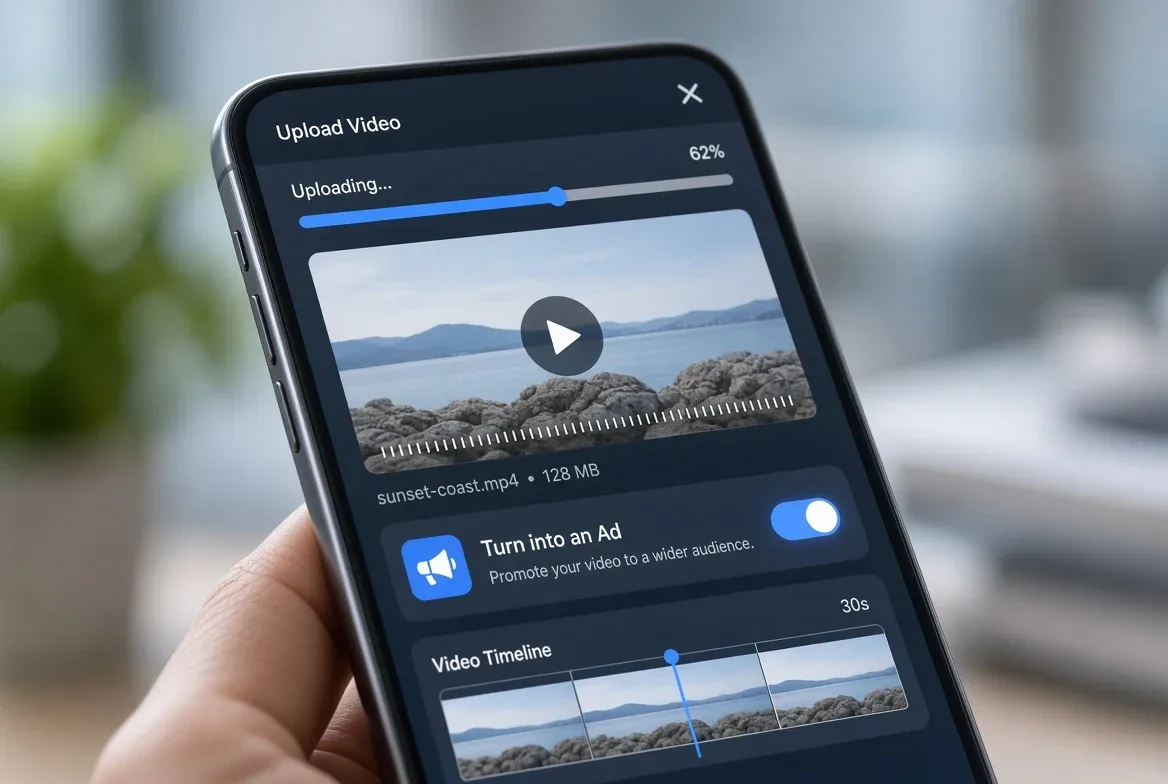
A creator who is paid, given free product, or otherwise compensated by a brand must tell the audience that connection exists, clearly and where it can't be missed, under the Federal Trade Commission's endorsement guides. No single phrase is mandated, but a disclosure buried in a caption's "more" link or a video description doesn't satisfy the rule.
The requirement sits with the person making the endorsement, not just the brand paying for it, and platform features like YouTube's paid-promotion checkbox or TikTok's branded-content toggle are tools for meeting that obligation, not a substitute for it.
What counts as a connection that has to be disclosed?
The FTC's endorsement guides set the standard as whether a "significant minority" of the audience would be surprised by the relationship if they knew about it, and whether knowing would change how they judge the endorsement. That covers a straight sponsorship fee, free or discounted product sent for review, an affiliate commission on a linked purchase, and family or employment relationships with a brand.
It does not turn on dollar amount. The FTC's guidance treats a single free product sent unsolicited the same way it treats a five-figure sponsorship: if the connection could plausibly sway a viewer's trust in the recommendation, it needs to be stated, not implied.
Family and employment ties fall under the same standard. If a creator is reviewing a product made by a company where a spouse or close relative works, or where the creator holds a financial stake, the FTC's guidance says that relationship needs to be disclosed alongside the review for the same reason a sponsorship fee does — a viewer weighing the recommendation would reasonably want to know it.
What words actually satisfy the rule?
The FTC does not require specific wording; it requires that "the essential information" reach the audience in plain language. Its own guidance lists acceptable formats: "This video is paid for by [brand]," "[Brand] gave me this to try," or a simple "Ad" or "#ad" placed where it will be seen.
What the agency flags as insufficient is just as specific. Tags like #sp, #collab, #ambassador, or a bare "thank you" to the brand don't spell out that money or product changed hands, and the FTC's guidance calls them out by name as disclosures that leave the actual relationship unstated.
Where does the disclosure have to appear?
Placement carries as much weight as wording under the FTC's "clear and conspicuous" standard. For video, the guidance says a disclosure works best near the beginning, not tacked onto the end after most viewers have stopped watching; for a photo or short-form post, it belongs at or near the start of the caption, not after a line break that requires a tap to expand.
On a livestream, where viewers join and leave throughout, the FTC's guidance calls for the disclosure to repeat periodically rather than run once at the start. A disclosure that's only spoken, with no on-screen text, misses anyone watching muted — a scenario the FTC's guidance treats as a real gap, not an edge case.
How do YouTube and TikTok's own tools handle it?
Both platforms built disclosure into the upload flow, and both frame it as the creator's obligation to activate, not an automatic protection. On YouTube, a creator marks a video as containing "paid promotion like a product placement, sponsorship, or endorsement" in YouTube Studio before publishing; doing so triggers an on-screen disclosure that YouTube's help center describes as appearing for the first several seconds of the video and linking viewers to more information.
TikTok's branded content policy works through a toggle in the posting settings: switching it on for content made on behalf of a brand automatically applies a "Branded Content" label to the post. TikTok's policy also requires that the product or service being promoted be identifiable from the content itself, without sending viewers to a bio link or an outside page to figure out what's being sold.
| Platform | Built-in disclosure tool | What it does |
|---|---|---|
| YouTube | "Paid promotion" checkbox in YouTube Studio | Shows an on-screen disclosure at the start of the video, per YouTube's help documentation |
| TikTok | Branded content toggle in post settings | Applies an automatic "Branded Content" label and may add the post to TikTok's Commercial Content Library |
Does an affiliate link or discount code count as a paid partnership?
Yes, under the FTC's material-connection standard. Earning a commission when a viewer clicks a link and buys something is exactly the kind of relationship the guidance says a "significant minority" of an audience wouldn't assume on its own, and it's grouped with cash payments and free product as something that needs a stated disclosure.
The same logic applies to a personal discount code tied to a creator's name: the code itself is a form of compensation, since it's typically only issued in exchange for promotion. The FTC's guidance treats "I get a small commission if you buy through this link" as the kind of plain-language disclosure that satisfies the standard — a bare "shop my faves" link with no mention of a financial relationship does not.
What happens if a creator skips it?
Consequences run on two separate tracks. Platforms enforce their own policies directly: YouTube's guidance describes video removal and channel strikes for undisclosed paid promotion, with repeated violations inside a 90-day window able to lead to a channel's termination. TikTok's policy allows for content removal or account restrictions for branded content posted without the toggle enabled, and it separately requires that the promoted product be identifiable from the post itself rather than through an outside link.
Separately, the FTC's endorsement guides describe both the endorser and the brand as potentially responsible for a missing or inadequate disclosure, since the agency's authority reaches deceptive endorsement practices regardless of which platform they occur on. The FTC's guidance is explicit that a platform's own labeling feature does not shift that underlying responsibility away from the creator and the brand — the toggle helps a platform track paid content internally, but it isn't what makes a disclosure legally sufficient.
Frequently asked questions
For a related business news perspective, read How creators actually get paid: the splits, the thresholds and the disclosure rules.