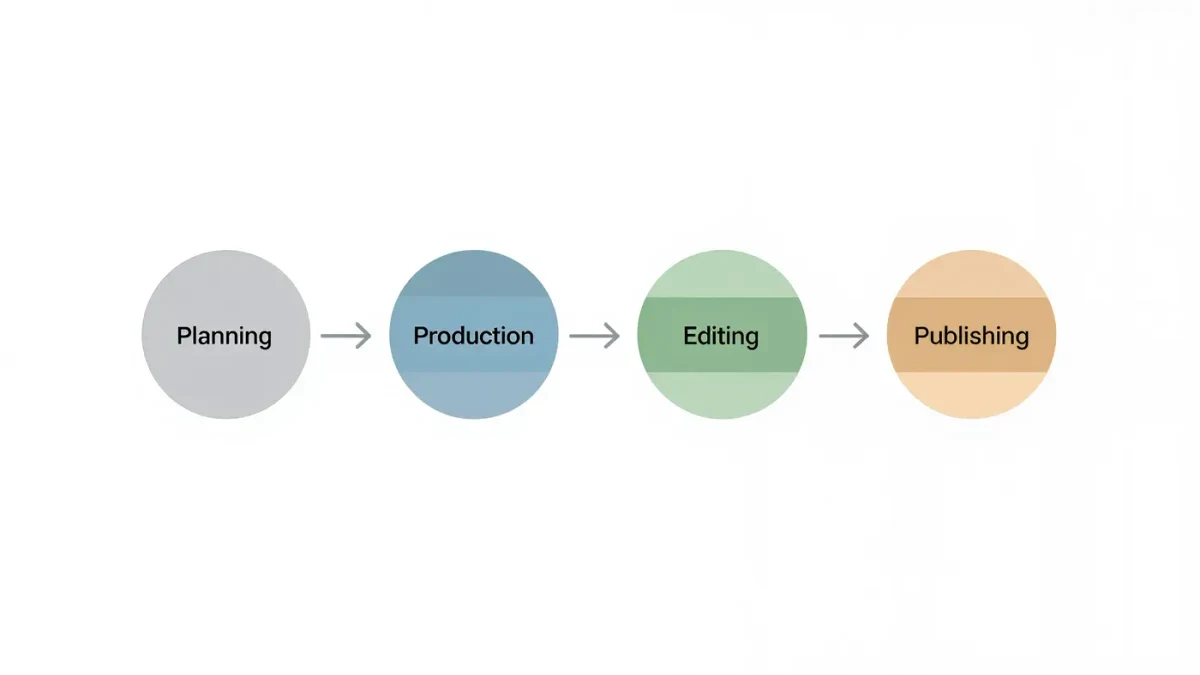
Repurposing video content means cutting, reframing and re-editing one production into multiple posts built for different platforms. A single 20-minute YouTube video can yield a dozen vertical clips, a Reel, a tutorial thread and a newsletter section. The practice lowers production cost per post — but only when each version is adapted, not merely reposted.
Why do creators repurpose instead of making original content for each platform?
The core reason is economics. Producing genuinely original material for five platforms multiplies shooting, editing and management work by five, while total audience size often does not follow. Repurposing lets a creator serve every audience from one production budget. A second reason is resilience: when one platform's reach dips after an algorithm change, the creator still has distribution elsewhere.
There is also a discovery logic. Short clips cut from a long video function as trailers. Viewers who encounter a 45-second excerpt on TikTok and want more are pushed toward the full version on YouTube or the newsletter. Repurposing, done well, is a funnel rather than duplication. creators coverage.
Which platforms should one video feed?
Most workflows target five destinations, each with distinct technical and stylistic demands:
| Platform | Format target | What changes in the edit |
|---|---|---|
| YouTube (long-form) | The master video, 8-30 minutes | Nothing — this is the source |
| YouTube Shorts | Vertical, under 60 seconds (as of 2025, up to 3 minutes) | Crop, re-caption, hard hook in first second |
| TikTok | Vertical, 15-90 seconds typical | Native text, trending audio considerations, no watermarks |
| Instagram Reels | Vertical, under 90 seconds | Cover frame, safe-zone margins for UI overlays |
| Newsletter / blog | Text, 300-800 words | Transcript cleaned into prose, stills as images |
The repurposing rule that separates professionals from beginners: each output must look native. A horizontal video with black bars and burned-in YouTube branding performs poorly on TikTok, and platforms have historically suppressed content carrying other platforms' watermarks.
What does the repurposing workflow look like step by step?
A repeatable pipeline has six steps, usually run weekly by a creator or their editor:
- Plan for fragments while scripting: write the master video with self-contained 30-60 second moments — one idea per beat — so excerpts make sense out of context.
- Publish the master video first and let it run for a defined window, commonly 24-72 hours, to establish it as the canonical version.
- Identify clip candidates using retention data and manual judgment: the moments where attention spikes or a complete point lands cleanly.
- Cut vertical versions: reframe the crop around the speaker, add platform-native captions, add a hook line in the first second, trim dead air.
- Stagger publishing across platforms across days or weeks rather than dumping everything at once, so the library lasts.
- Convert the transcript into text formats: a newsletter section, a blog post for search traffic, or X and Threads posts quoting the sharpest lines.
What tools do creators use to scale this?
The tool market splits into three layers. Editing suites — Premiere Pro, DaVinci Resolve, Final Cut — handle the master and the most polished cuts. Fast vertical editors such as CapCut and Descript speed up captioning, reframing and transcript-based editing. A third category of repurposing-specific tools automates clip selection, aspect-ratio conversion and scheduling across platforms.
Automation has real limits. Tools can detect speaking segments and generate captions, but choosing which moment is genuinely interesting is still a human judgment in most working pipelines. Creators who fully automate often publish technically competent clips that lack the hook a manual editor would keep.
What are the common mistakes?
The most frequent failure is watermark cross-posting — uploading a TikTok export complete with its logo to Reels or Shorts, which historically triggered reduced reach on competing platforms. The second is context collapse: clipping a segment that depends on an earlier explanation, leaving new viewers confused within seconds. The third is ignoring each platform's caption norms, from character limits to hashtag culture to whether the audience reads captions at all.
A subtler mistake is treating repurposing as free. Each platform-native version still costs editing time, and a five-platform pipeline run casually produces five mediocre posts. Professional teams budget real hours per fragment and accept publishing fewer, better-adapted pieces.
How do you measure whether repurposing is working?
The useful metrics differ per destination. For short-form fragments, watch-through rate and follows generated indicate whether the clip earns new audience rather than empty views. For the master video, traffic sources showing viewers arriving from other platforms reveal the funnel effect. For the newsletter, subscriber growth attributed to video calls-to-action is the cleanest signal.
Creators typically review this monthly and prune underperforming platforms. Running all five destinations makes sense only while each contributes audience or revenue; a channel whose Reels consistently underperform is often better served concentrating effort on two platforms that convert.
How does repurposing change how a video is written?
The pipeline's biggest effect is upstream: it changes scripting. Creators who know a video will be fragmented write differently. They front-load a strong opening because the first fragment usually comes from it. They structure the body as numbered points or clearly separated segments, each with a beginning and an end, because self-contained beats clip cleanly. They also avoid long entrances and throat-clearing, which edit poorly into short formats.
Interviews and podcast-style shows apply the same discipline. Hosts ask guests to restate context inside answers — restating the question inside the answer — so an excerpt can travel alone. Some shows mark clip candidates in real time during recording, noting timestamps when a moment lands, which saves hours of scrubbing footage later.
The result is a mild tension worth naming: writing for fragments can flatten longer-form storytelling. Tightly segmented videos clip well but can feel list-like in full. Creators with narrative styles often accept a lower fragment yield and cut fewer, stronger excerpts rather than restructure everything around repurposing.
Does repurposing risk boring the audience?
It can, when the same fragment appears everywhere within hours and overlapping audiences see it repeatedly. Mitigations are standard practice: stagger timing, vary captions and cover frames, hold some fragments as platform exclusives, and let each platform's comment section receive different discussion prompts. Overlap between platform audiences is usually smaller than creators fear, but it is not zero for tight-knit communities.