Streaming platforms decide whether to order or renew a series using internal engagement data, chiefly completion rates and hours viewed in the first weeks after release, weighed against the show's cost and its measurable effect on subscriber behavior. Netflix executives have said on the record that finishing a show, not starting it, is the signal that matters. The specific internal targets are not published, so outside analysis relies on self-reported engagement reports and executive statements through 2025.
What metrics actually drive the decision?
Completion rate is the metric executives cite most. A viewer who watches a series to its finale has consumed, and presumably valued, the whole product, which makes completion a cleaner quality signal than raw starts, which marketing spend can buy. Netflix's leadership has repeatedly framed the question as whether people finish shows, and industry reporting has described internal benchmarks around first-28-day viewing and completion that shows are quietly measured against, figures the company does not publish.
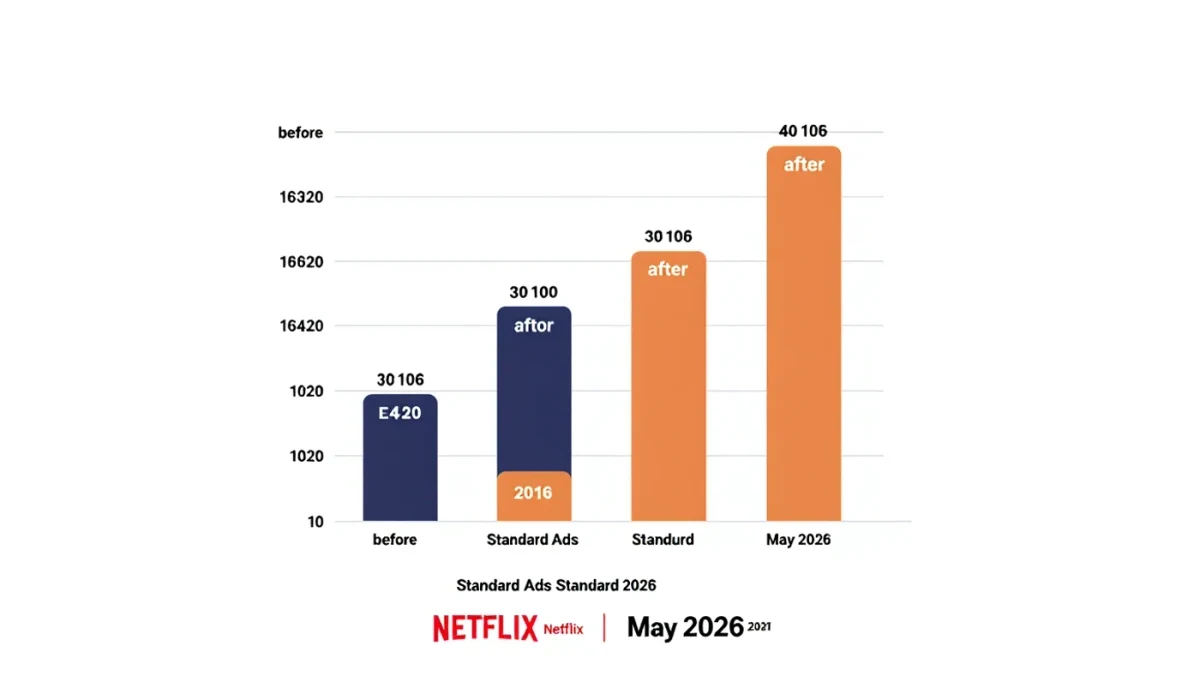
Hours viewed in the initial window matters as the scale factor, and it became semi-public in 2021 when Netflix began releasing weekly hours-viewed charts and then, in 2023, switched to a standardized views figure dividing hours by runtime. Start rate, the share of viewers who begin a title after seeing it, measures packaging, while completion measures the content itself. A show that starts strong and fades is the profile platforms cancel; strong completion on modest reach is the profile that earns a second season despite smaller headlines.
How does cost enter the calculation?
The greenlight equation is efficiency: expected engagement per dollar, plus subscriber impact. A big-budget series justifies its cost either by reaching very large audiences or by demonstrably driving sign-ups or retention, and platforms attribute subscriber behavior to titles through internal models they describe only in outline. Netflix executives have said the company weighs viewing against cost, effectively a return-on-investment test for each renewal, which is why expensive shows with average engagement are cancelled more readily than cheap ones with the same numbers.
That arithmetic explains the visible pattern in cancellation waves from 2022 onward: as streaming growth slowed and investors demanded profitability, platforms cancelled a swath of expensive series with middling engagement, wrote some down entirely, and removed titles from their own services in licensing-purge moves that prioritized accounting over audience.
| Metric | What it signals | Public availability |
|---|---|---|
| Completion rate | Whether viewers value the content | Internal only; executives confirm its use |
| Hours viewed / views in 28 days | Scale of engagement | Partially public via weekly charts since 2021 |
| Start rate | Packaging and marketing pull | Internal only |
| Subscriber acquisition and retention | Direct business impact | Internal attribution models |
| Cost per viewed hour | Efficiency of spend | Internal only |
How do other platforms differ?
The metrics are converging, but the weighting differs by business model. Netflix, as the largest subscription service, leans hardest on raw engagement efficiency. Disney+ and Max evaluate series in part as support for franchise ecosystems, where a show's value includes what it sustains beyond itself, licensing, parks, merchandise, a logic executives at both companies have described publicly. Amazon's Prime Video sits inside a retail membership, so its content decisions serve retention of the broader Prime relationship, a framing Amazon executives have used to justify spending that pure subscriber arithmetic would question.
Ad-supported tiers, which grew across every major platform from 2022 onward, add another metric: hours generate advertising inventory, which can keep a lower-prestige, reliably watched series alive because it monetizes attention directly rather than only through subscriptions.
Why do Netflix's own numbers only partially help?
The weekly top-ten reports, published since 2021 and expanded after the 2023 metric change, show what is being watched but not completion, not subscriber attribution and not cost, which are the actual decision inputs. Outside firms, most prominently Nielsen's streaming ratings, measure viewing on a US panel basis that differs from each platform's global internal counts. Observers who combine the public charts with cancellation announcements can infer the thresholds approximately, and the consistent lesson of those inferences is that no fixed audience number guarantees renewal, because the denominator is always the show's cost.
What does this mean for viewers and producers?
For viewers, the system explains the cancellation pattern that defines the streaming era: shows built for slow-burn accumulation get less runway than they would have in the linear ratings era, because completion in the first weeks is what is measured, and a binge release concentrates the entire test into one window. For producers, it explains contract structures that increasingly tie compensation and marketing commitments to those early windows, and why second seasons are ordered quickly for shows that complete strongly, sometimes within days of release, while borderline shows hang unresolved for months while the models run.
The system's defining trait is that it is legible to the platforms and opaque to everyone else. Executives have confirmed the categories of measurement on the record; the thresholds remain private, and every cancellation controversy since 2020 has ultimately been an argument between an audience's attachment and an equation neither side can see.
How did the measurement era replace the pilot era?
The shift is younger than it feels. In the linear television model, a pilot was ordered, aired, and judged by Nielsen ratings and advertising sales against a known slot, a system where success was measured by who watched live. Streaming's first decade greenlit on reputation and speculation, spending heavily on talent packages with little measurement discipline, which produced the 2013-2020 content boom. The correction arrived when subscriber growth flattened: from 2022, every major platform restructured around engagement efficiency, canceling generously, selling or licensing titles outward, and reorganizing studios around data-supervised spending. The measurable change for outside observers was transparency itself: Netflix's 2021 decision to publish weekly hours-viewed charts, refined into the standardized views metric in 2023, turned what had been a black box into a partially open one. That partialness is the current equilibrium as of 2025, executives name the metrics, the companies publish scale, and the thresholds that convert those numbers into greenlights remain where they have always been, inside the building.