Celebrity podcast deals are licensing agreements in which a platform, most prominently Spotify or Amazon, pays a known host for distribution of their show. Reported values have topped one hundred million dollars, but the structure has changed since the peak: as of 2024, the largest agreements favor non-exclusive distribution with revenue sharing rather than total lock-up.
How did the celebrity podcast market get started?
The market scaled between 2018 and 2021 as platforms competed for listening time. Spotify spent aggressively on both production companies and individual shows, acquiring the network Gimlet in 2019 and signing exclusive agreements with well-known hosts. The strategic logic was simple: an exclusive show brought its audience to the platform, where they could be shown subscription and advertising products.
Amazon entered in 2021 with an exclusive agreement for the show "SmartLess," hosted by Jason Bateman, Sean Hayes and Will Arnett, a deal reported in the tens of millions of dollars. Other technology and media companies, including SiriusXM, which later took over "SmartLess" in a 2024 agreement, followed the same pattern of paying for known names to anchor their audio offerings.
What did the biggest deals look like on the record?
The benchmark case is "The Joe Rogan Experience." Spotify signed the show to an exclusive license in 2020 in a deal widely reported near one hundred million dollars, later reported by The Wall Street Journal above two hundred million. A February 2024 renewal was reported at up to two hundred fifty million, non-exclusive, returning the show to YouTube.
| Deal | Platform | Year | Reported structure |
|---|---|---|---|
| The Joe Rogan Experience | Spotify | 2020 | Exclusive license, reported above $100M |
| The Joe Rogan Experience renewal | Spotify | 2024 | Up to $250M, non-exclusive, revenue share |
| SmartLess | Amazon | 2021 | Exclusive window, reported in the tens of millions |
| SmartLess | SiriusXM | 2024 | Distribution and ad sales agreement |
Figures for these agreements come from major-outlet reporting rather than full public disclosures, since the private companies involved do not publish contract terms. The direction of the numbers, however, is consistent across sources.
Why did platforms pay so much for celebrity hosts?
Because podcasts retain audiences, and retained audiences can be monetized more than once. A platform hosting an exclusive show earns advertising on it, converts some listeners into subscribers, and collects data that improves recommendations. For a celebrity, the show is a durable asset that travels with their career.
There was also a defensive element. In 2020 and 2021, executives described audio as a strategic category in earnings calls and investor letters. Losing a top show to a competitor was seen as a measurable loss of listening hours, which justified premiums well above the advertising value of the shows at signing.
Why did the market shift away from exclusivity?
Because exclusivity capped growth without paying for itself. A show locked to one platform loses its audience on YouTube and other feeds where casual listening happens, and advertisers pay for total reach. The 2024 Rogan renewal codified the correction: wider distribution plus a revenue share can out-earn an exclusive guarantee, particularly for shows with large back catalogs.
Spotify also restructured its podcasting division beginning in 2022, canceling several studio-produced shows and reducing head count, which executives explained as a shift toward efficiency after heavy investment. That broader retrenchment pushed the whole market toward licensing and advertising partnerships. Meghan Markle's "Archetypes," produced under an exclusive Spotify agreement signed around 2020, ended in 2023 when the parties did not renew, an outcome both sides confirmed publicly.
How do these deals actually pay out?
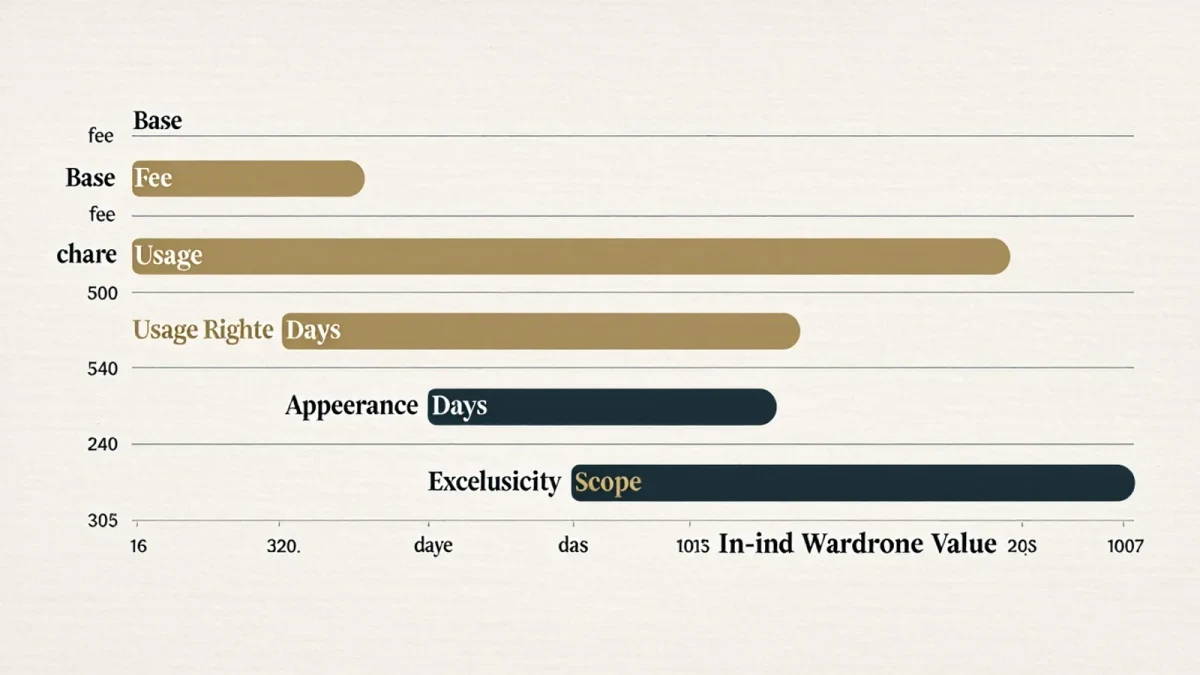
Agreements typically combine an upfront minimum guarantee with performance-based compensation. The guarantee is paid regardless of audience, while performance components can include advertising revenue splits, subscription conversion bonuses and download-threshold milestones. Hosts with production companies keep ownership and license distribution, preserving resale value.
The SmartLess team's own company is the reference case of hosts retaining intellectual property while licensing distribution. For celebrities entering the market after 2024, the realistic structure is a distribution and ad-sales partnership with a platform, ownership retained by the host's company, and total compensation driven by audience size rather than a large guarantee. The era of nine-figure exclusives appears, on the available record, to have been a bounded phase.
What role do acquisitions play alongside star deals?
A large one, because platforms bought infrastructure as well as names. Amazon acquired the network Wondery in late 2020 in a deal reported near three hundred million dollars, and SiriusXM bought Stitcher the same year for a reported three hundred twenty-five million, gaining ad sales and production capacity.
Infrastructure mattered more than the marquee signings in the long run. A network brings an advertising sales force, a catalog that fills listening hours, and production teams that can launch a celebrity show without hiring from scratch. When Spotify restructured its podcast division, it consolidated its studio brands into fewer units rather than exiting production, which preserved that machinery while cutting cost.
The consolidation phase had casualties that illustrate the risk. SiriusXM shut down the Stitcher app in 2023 even though it kept the Stitcher studios it had paid for, and several well-funded networks reduced staff or folded shows between 2022 and 2024. For celebrities negotiating in that environment, the practical question became which counterpart survives the contract term, not only how much it pays.
| Acquisition | Buyer | Year | Reported value |
|---|---|---|---|
| Gimlet Media | Spotify | 2019 | Reported near $200 million |
| Stitcher | SiriusXM | 2020 | Reported $325 million |
| Wondery | Amazon | 2020 | Reported near $300 million |
| The Ringer | Spotify | 2020 | Reported near $200 million |
Acquisition figures, like talent figures, come from major-outlet reporting on private transactions. The direction is consistent: platforms spent billions assembling podcast businesses in roughly three years, then spent the following two years rationalizing them.
What should listeners take from the numbers?
The reported figures describe business risk, not just celebrity earnings. Platforms wrote down part of their investment when listening did not shift as projected, and the survivors broadened distribution. Listeners benefit directly: the same program now appears on multiple apps, including free YouTube uploads, instead of requiring one platform account.