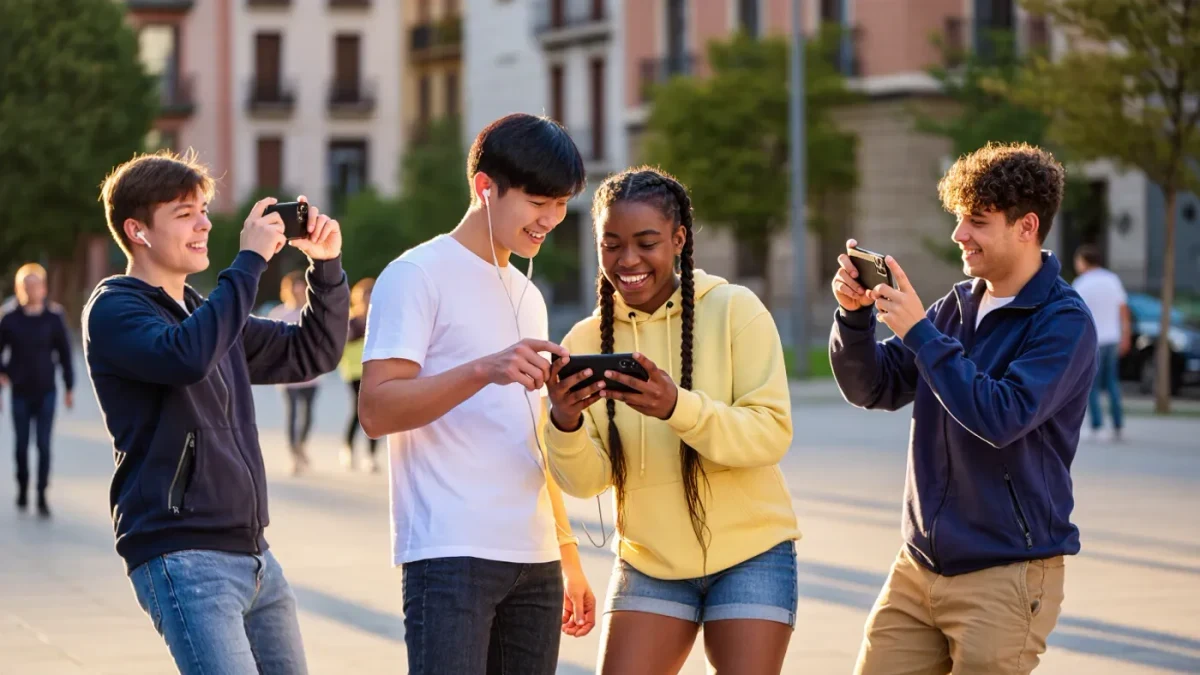
Short-form video music discovery works through sounds: a clip of a song spreads across TikTok, Reels and Shorts, and viewers carry the track to streaming services. A 2021 TikTok-commissioned study by MRC Data found 75 percent of users discovered new artists on the platform. Labels responded by rebuilding marketing around short video rather than radio.
How do listeners find songs in short video?
Through the sound layer, not the artist page. Every clip carries the audio it used, a tap leads to the sound's page, and the page shows every other video built on it. A trend using fifteen seconds of a song can expose it to more people in a week than a radio campaign, and listeners then search the streaming services for what they heard.
The platforms built for this behavior. TikTok's commercial music library gives creators pre-cleared songs to use, Reels imports the same habit, and YouTube reported more than seventy billion daily Shorts views in early 2024. Even the streaming services conceded the pattern: at its March 2023 Stream On event, Spotify introduced preview-heavy, swipeable music feeds and an automated DJ, adopting short video's grammar inside an audio app.
The search behavior is the measurable residue. When a sound takes off, the song's title trends in search, streaming counts jump within days, and the pattern is clean enough for labels to time promotions to it. Discovery has effectively become a video product with an audio checkout.
Creators are the distribution arm. Labels do not upload most of the clips that break a song; ordinary users and mid-sized creators do, each adding a video to the sound's page. The platform rewards whichever sound earns the most derivative videos, which is why a song's most usable fifteen seconds matters more than where its chorus sits on the album.
What did the labels change?
Release planning flipped. Instead of servicing radio first and hoping for social pickup, labels now seed sounds with creators before a single officially impacts, running paid creator campaigns and watching usage velocity. The sound campaign precedes the song campaign, and radio is a later stop for songs that already proved themselves in feeds.
Catalog departments were rebuilt around the same insight. Older songs can trend decades after release: Fleetwood Mac's Dreams returned to the Hot 100 in 2020 after a skateboarding video, and Kate Bush's Running Up That Hill reached the top of the UK charts and the US top ten in 2022 after a television placement and the short-video wave that followed. Every catalog now has a team looking for the next dormant asset one clip away from a second life.
Staffing followed the money. Marketing teams that once tracked radio adds now track sound creation counts, and creator relations became a standing label function rather than a novelty role. The job is to make a song easy to use and then to notice, quickly, when usage starts.
Which numbers define the shift?
A handful of documented figures anchor the trend. The discovery percentages come from the MRC Data study TikTok commissioned in 2021, and the platform-scale and chart outcomes are public record.
| Finding | Figure | Source | Year |
|---|---|---|---|
| TikTok users who discover new artists on the platform | 75 percent | MRC Data study for TikTok | 2021 |
| Users who heard music there for the first time | 63 percent | MRC Data study for TikTok | 2021 |
| YouTube Shorts daily views | 70 billion-plus | Alphabet earnings reporting | 2024 |
| Dreams returns to the Hot 100 | Decades after release | Billboard chart data | 2020 |
| Running Up That Hill revival | UK number one, US top ten | Official Charts and Billboard | 2022 |
Two caveats belong next to the table. Survey figures measure what users say, not what they stream, and chart revivals reflect exceptional cases rather than averages. The direction of the evidence, however, is consistent across every source: discovery moved to short video, and it stayed there.
What happens when the money disagrees?
The licensing fights catch up. In February 2024, Universal Music Group removed its catalog from TikTok after publicly criticizing the platform's payments to artists and songwriters, muting the sounds of some of the world's biggest recordings. A new agreement restored the music in May 2024, on terms Universal described as improved for its roster.
The dispute exposed the imbalance at the center of the system. Short video platforms pay negotiated license fees rather than per-play royalties, and the major rightsholders argue those fees lag the promotional value the platforms extract. Artists experienced the standoff directly: videos using licensed music went silent, and songs in mid-trend lost their momentum for months.
For the industry, the episode confirmed that discovery infrastructure had become too consolidated to leave to one contract. Labels diversified sound campaigns across platforms afterward, and the next renewal cycle is being watched as a test of whether the payment side catches up with the discovery side.
What are the limits for artists?
A sound is not a career. Virality attaches to fifteen seconds, and the leap to sustained listening, touring and fandom is what the platform cannot supply. Industry reporting has documented one-hit cases where the sound outgrew its artist. The acts that converted did the traditional work afterward.
The payouts are the other limit. A billion short-video uses does not translate into proportional royalties, since licensing fees are negotiated in bulk, and the major labels have said so publicly. Discovery has never been cheaper for listeners or more expensive to monetize for artists. The acts that converted, from Lil Nas X onward, treated the platform as a top of funnel and then invested in releases and touring.
Platform risk compounds the uncertainty. A sound's reach depends on ranking systems the industry cannot audit, artists have no direct relationship with the feed that decides their exposure, and a single licensing dispute can switch an entire catalog off mid-trend, as February 2024 demonstrated. Discovery infrastructure this efficient is also fragile.
What should listeners expect next?
More of the format inside everything. Streaming apps now preview music in swipeable video-style feeds, platforms keep expanding licensed libraries, and every rights negotiation will be shaped by what happened in 2024. As of 2025, the sequence is stable: hear a sound, stream the song, see the artist on tour.