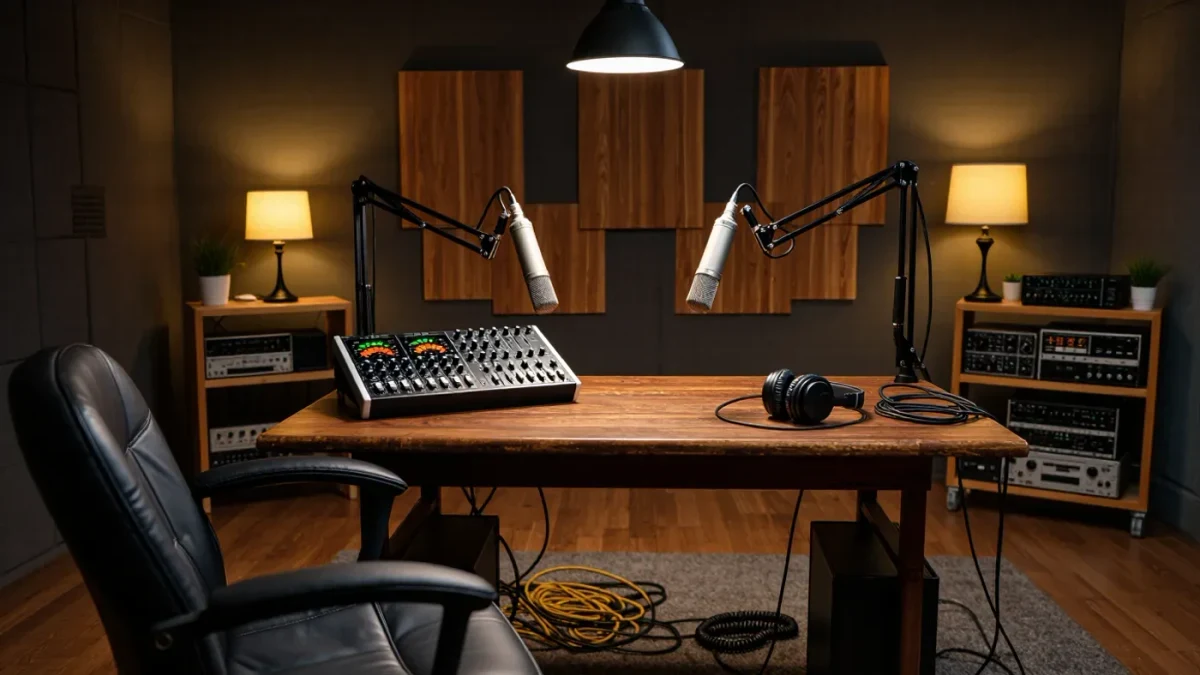
The podcast clip economy works by cutting episodes into short vertical segments that circulate on TikTok, Reels and Shorts, where they reach audiences the full show never meets. Clips function as trailers, and platforms have rebuilt their podcast features around them. The catch is rights: a clip belongs to the recording's owner, not the fan page that posts it.
Why do clips matter more than episodes?
Because discovery happens in feeds, and episodes do not fit feeds. A three-hour conversation is a commitment, but a forty-second cut of its best moment is scroll-compatible, and the algorithmic feeds surface it to strangers rather than subscribers. The clip is the sampler; the episode is the product.
The scale of that funnel is now documented. Edison Research's Infinite Dial survey found in 2024 that YouTube had become the most-used platform for podcast listening in the United States, passing the dedicated audio apps, and much of that lead is built on clips and video cuts rather than full episodes. YouTube is where podcast moments are searched, quoted and replayed.
The industry reorganized around the finding. Video podcasting moved from experiment to default, hosts film their episodes as a matter of course, and show budgets include a clip editor alongside the audio engineer. The question a new show asks is no longer whether to make clips but how many per episode.
Who owns a podcast clip?
The owner of the recording, which is usually the host, their production company or the network. Copyright attaches to the sound recording itself, so reposting a minute of someone else's episode is using their property, whatever the credit line says. Attribution is not a license, the same rule that governs celebrity photography.
In practice, enforcement is selective. Official clip channels run under explicit licenses from the rights holder, and the largest shows operate their own clip operations at industrial scale. Fan clip pages occupy the tolerated middle: many rights holders ignore them because free distribution helps the show, and some send takedowns when a page grows large enough to sell advertising against content it did not make.
Platform policy sets the outer boundary. YouTube's reused-content rules limit monetization for channels that repost material without meaningful transformation, and Meta and TikTok require commercial relationships to be declared on branded clips. A fan page can operate for years, but its position is a courtesy extended by the rights holder, not a right.
How are clip operations structured?
Three ways: in-house teams, licensed partners and fan labor. In-house is now standard for major shows, with staff producers cutting episodes into scheduled vertical posts. Licensing deals assign clip rights to a partner page in exchange for a revenue share or a flat fee. Fan pages do the work for free, monetize until challenged, and are the industry's unpaid research department.
The platforms shaped this structure deliberately. Spotify, which spent years on exclusivity, added video feeds to podcasts and then comments in 2024, aligning its product with the clip-first behavior that made YouTube the category's growth engine. YouTube introduced Shorts revenue sharing in 2023, giving rights holders a direct reason to publish official cuts rather than tolerate fan copies.
The 2024 Joe Rogan Experience renewal is the clearest signal of where power sits. The show returned to YouTube and other platforms after years of exclusivity, with distribution designed so that clips could circulate widely again, because wide clip circulation was worth more than a closed garden.
What does the clip economy look like platform by platform?
Different surfaces, different rules, and one consistent principle: the rights holder controls the material, even where enforcement is loose.
| Surface | Typical clip source | Governing rule |
|---|---|---|
| YouTube Shorts | Official channels, licensed partners | Reused-content policy; Shorts revenue sharing since 2023 |
| TikTok | Official and fan pages | Rights-holder takedowns; creator fund length minimums |
| Instagram Reels | Official and fan pages | Branded-content rules when paid |
| Spotify video | In-app clips and full video | Platform-hosted under license |
The table's quiet row is Spotify: the platform that bet against open distribution spent 2023 and 2024 rebuilding the open behaviors it had paid to suppress, because the clip economy kept routing attention, and listening, back to YouTube.
What are the risks of clip-driven growth?
Context collapse is the biggest. A remark clipped from hour two of a conversation loses the framing that made it intelligible, and clipped statements regularly become news stories on their own. Shows built on long context are structurally exposed to their most quotable sixty seconds.
The second risk is audience mismatch. A clip audience arrives expecting short-form rhythm, and the episode may be a slow three-hour conversation; conversion from view to listener is measurable and often thin. Marketing teams track it carefully, because a viral clip that generates no listeners is a vanity number.
The third is platform dependence. Clip reach lives on feeds whose rules and payouts change without notice, and short-form monetization runs well below long-form rates. A show whose business depends on clip revenue is renting its growth from three landlords at once.
Where is the money in clips?
Three places: direct ad revenue on the clips themselves, sponsor reads embedded in the segments, and the funnel value of listeners converted to tickets, subscriptions or merchandise. For most shows, the third is the real number; clip ad revenue alone rarely justifies the editing staff.
That is why rights holders concentrate on official channels despite the cost. An owned clip operation converts viral attention into subscribers the show keeps, while a fan page converts the same attention into an audience the show can only borrow. The clip economy rewards those who clip themselves.
How should listeners and creators read clips?
Treat every clip as an advertisement for a conversation you have not heard. For listeners, the habit worth keeping is checking the episode and timestamp before judging a quoted line, since context is usually one tap away. For creators, the lesson of the last three years is simple: cut your own show, publish on every surface, and keep the receipts of what grew.