Good platform sandals come down to three things: how the sole is built, how the footbed supports your arch, and how the straps hold your foot. Get those right and a three-inch platform can feel steadier than a skinny heel half its height. Get them wrong and you pay for a shoe you can't walk in.
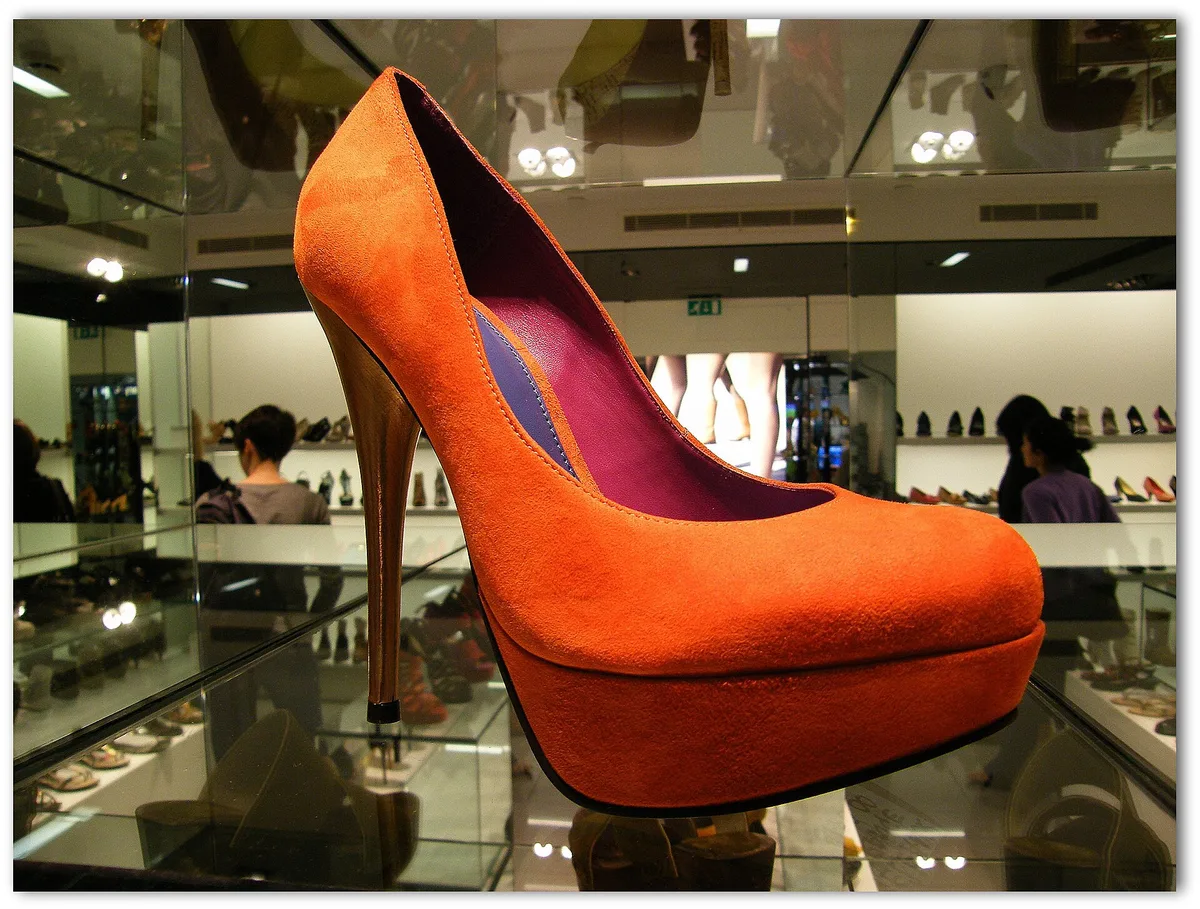
The word itself is simple. A platform, as Dictionary.com defines it in its footwear sense, is a thick insert of leather, cork, or other sturdy material between the upper and the sole, usually added for style or height. That insert is exactly what you should be inspecting in the store, because everything about comfort and durability flows from what's inside it.
This guide walks through how platform sandals are constructed, what to check for fit, how to judge height against your own gait, and where the money in the price tag actually goes. If you want the backstory first, the history of platform shoes, explained covers how the style cycled through decades of fashion. Here we stay practical.
What should you check before buying platform sandals?
Start with the footbed, not the look. Press your thumb into the area under the arch. A quality sandal gives slightly and springs back. A rock-hard or crumbly surface means cheap filler that won't soften with wear.
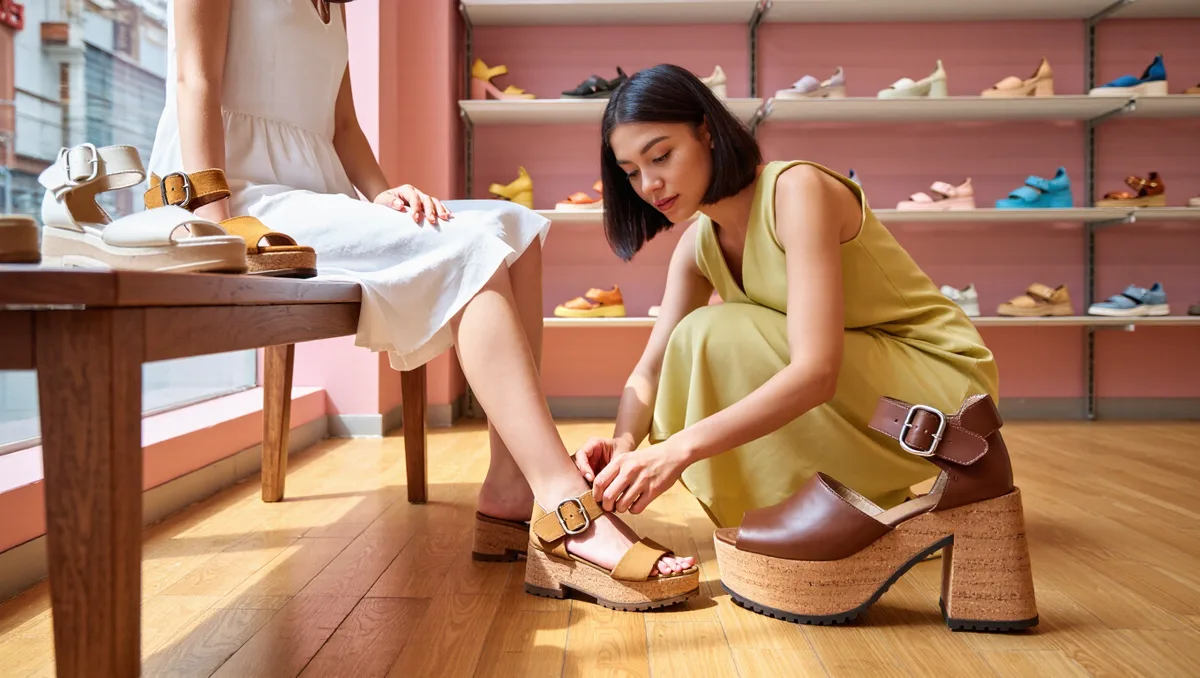
Next, check the toe area. Your foot should sit flat on the platform with a little room at the front, roughly a finger's width beyond the longest toe. Because platforms are rigid, they don't flex to meet your foot the way a flat sandal does. Fit has to be right at purchase, not broken in later. Readers following this should also see Best platforms to sell online: a seller's comparison guide.
Then test the straps. You want at least one strap that crosses the instep and holds firmly. Sandals that rely only on a toe post force your toes to grip with every step, which is tiring over a long day.
How does construction differ between cheap and well-made platforms?
The insert is where makers cut costs. Dictionary.com's definition names the traditional materials: leather, cork, and other sturdy material. Cork is the classic choice because it is light and molds to your foot over time. Leather-wrapped platforms hold their shape and age well. Molded foam is lighter still, but the softest foams compress unevenly, which can make your gait feel lopsided after a season.
Look at how the platform joins the sole. On a well-made pair, the layers are stitched or securely bonded with no visible gaps at the edge. On a cheap pair, you can often see glue lines and rough edges where layers meet. That edge is the first place a platform fails.
Finally, judge the outsole. A flat, rigid platform needs a sole with some grip, because the whole foot lifts and lands as one unit. A slick outsole on a smooth floor is the most common fault we hear about, and it isn't visible in product photos. Check it in person or in detailed listing shots.
How much height is too much?
There is no universal number, because what matters is the drop between the platform under your toes and the heel under your foot. A platform with a steep rise from toe to heel tilts you forward and puts weight on the ball of the foot. A flatter platform, where the front and back are closer to the same thickness, keeps your weight spread and your stride natural.
A useful test in the store: walk a full lap, including a turn. On a well-proportioned platform your heel should land flat, not clap down. If you feel yourself balancing on each step rather than walking, the geometry is wrong for you, however good the shoe looks.
Practical steps if you're between two heights: choose the flatter pair for all-day wear, the higher one for short occasions. Many people find one of each covers a summer.
What does the price actually pay for?
Our analysis of how these sandals are built suggests you're paying for three things in rough order: materials, handwork, and brand. Natural cork and real leather cost more than molded foam and synthetics, and they last longer. Hand-finishing the platform edge, where each layer is shaped and sealed, takes time that machine production skips.
Beyond that, the premium is largely a name. There's no quality difference you can feel that justifies every price gap between two visually similar pairs. Turn a sandal over before you judge it by the label: the footbed, the edge finish, and the outsole tell you more than the logo.
One more cost worth knowing: repair. Cork platforms can often be re-wrapped or resoled by a cobbler, which stretches the cost per wear considerably. Glued foam platforms usually can't be repaired at all, so a cheap pair that fails mid-summer is a total loss.
How should you care for platform sandals so they last?
Keep them dry. Cork and leather both degrade faster when soaked and heat-dried, so air-dry them away from radiators. Wipe leather straps with a damp cloth and condition them occasionally so they don't crack at the flex points.
Store them upright, not stacked under other shoes, because the platform edge can dent. And rotate: a platform compresses under your specific footprint, so giving a pair a day off lets the footbed recover its shape.
What this means for your summer purchase
The evidence here is straightforward: a platform sandal is a rigid structure, so its quality is decided at the factory, not broken in on your feet. Check the footbed's give, the edge where layers meet, the instep strap, and the geometry of the rise. Pay for materials and handwork when you can see them, and skip the premium when all you're buying is a name. Do that, and the height stops being a risk and becomes the point.