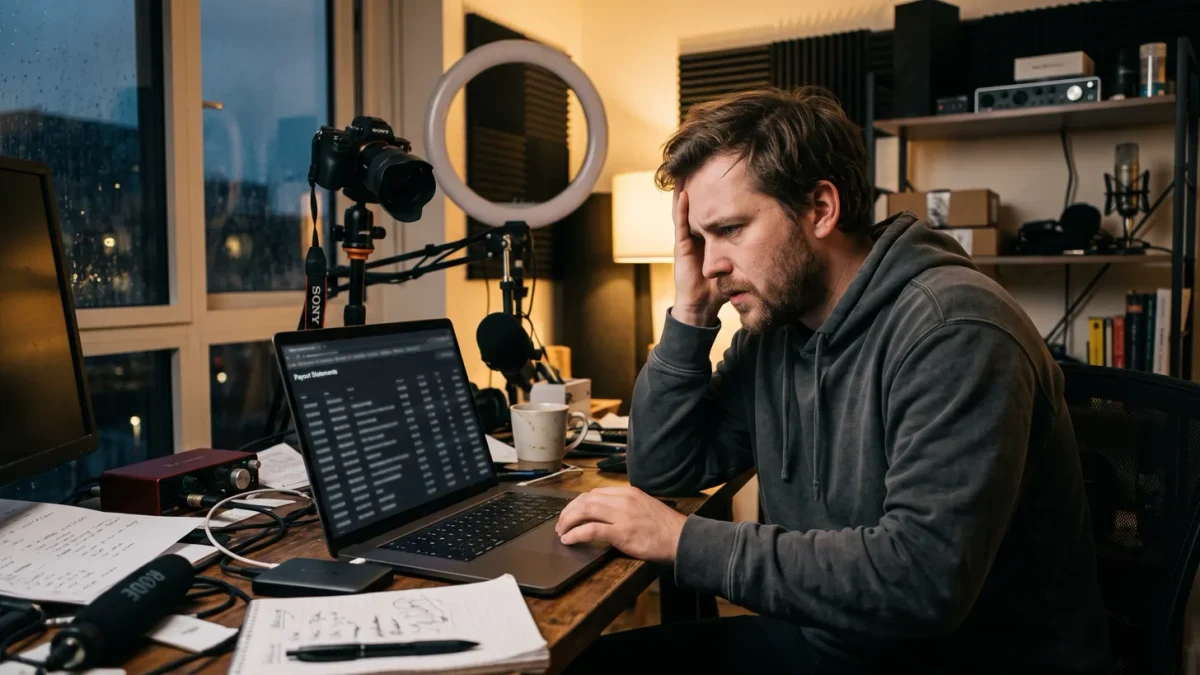
A creator should hire a manager when business work — fielding brand offers, negotiating rates, scheduling, paperwork — consumes the hours needed to make content, and the deals justify a percentage. For most creators that arrives somewhere near 100,000 engaged followers, but follower count alone is a poor trigger. The real signals are time, money and missed opportunity.
What does a creator manager actually do?
A manager handles the creator's career operations day to day: filtering inbound brand emails, negotiating rates and deliverables, coordinating with the creator's editor or agent, chasing invoices, and often shaping the content or business strategy. In the talent tradition the role is part advisor, part gatekeeper. Managers typically take a commission on the creator's total earnings rather than a salary.
The boundaries between adjacent roles matter. An agent focuses on sourcing deals and, in regulated contexts, is defined by talent-agency law. A manager focuses on running the creator's business. An agency is a company that may represent many creators and add support staff. In practice at the independent level, one person often does all three under the title 'manager', which is why contract scope matters more than job title.
What are the standard commission rates?
Commission norms descend from the talent industry. The traditional talent-agency rate is 10 percent. Managers commonly charge 15 to 20 percent. Managers who take on broader responsibilities — running a whole business line, negotiating production deals, supervising staff — sometimes reach 25 percent or shift to a hybrid of retainer plus commission. Rates above that deserve scrutiny.
| Representative type | Typical commission | Core function |
|---|---|---|
| Talent agent | 10% | Sourcing and booking deals |
| Manager | 15-20% | Career operations, negotiation, strategy |
| Business manager | 5% or flat fees | Accounting, taxes, investments |
| Hybrid manager-operator | Up to 25% or retainer plus commission | Runs additional business lines |
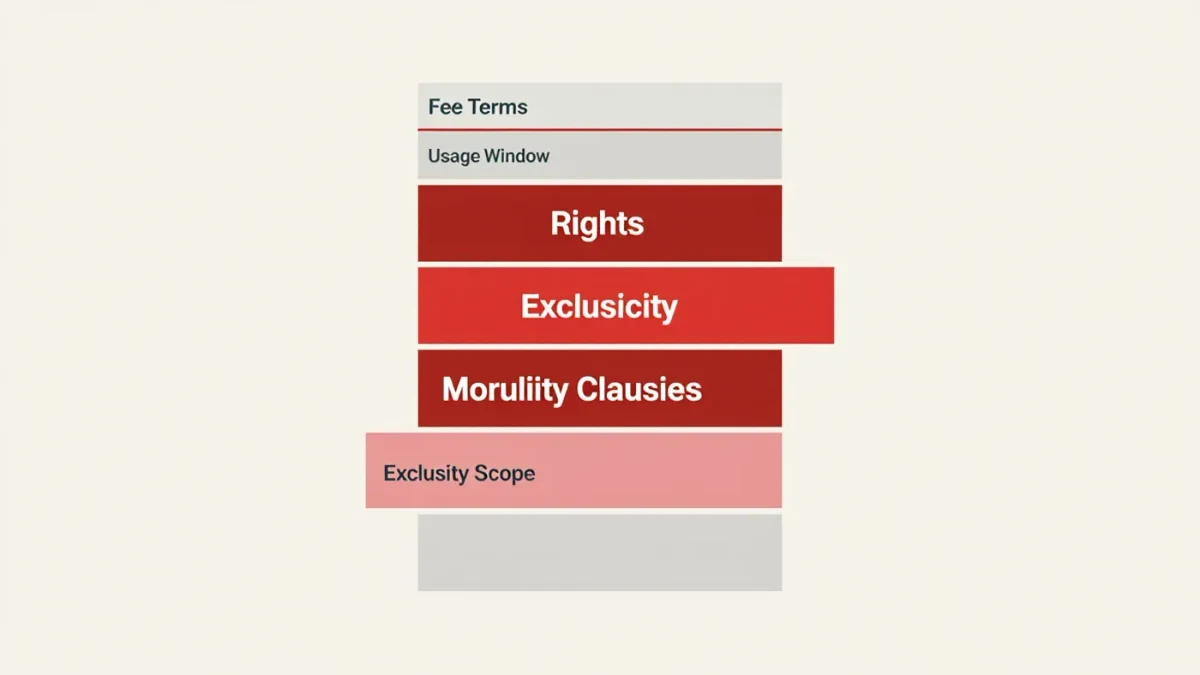
Percentages are negotiable and should be written down. Two structural questions to settle in the contract: commission on gross or net income, and whether the commission covers all revenue — including platform ad payouts and the creator's own product sales — or only deals the manager brings in. Industry practice varies; both models exist, and the difference can be worth more than the headline percentage.
What signals show a creator is ready?
Five signals recur among creators who benefited from hiring representation:
- Inbound volume: multiple brand inquiries weekly, enough that unanswered email means lost money.
- Rate stagnation: the creator accepts offers as given because negotiating costs production time.
- Missed deadlines or deliverable errors that threaten renewal deals.
- Calendar overflow: scripting and filming squeezed into evenings because days go to admin.
- Complex opportunities the creator cannot evaluate alone — licensing, TV, publishing, equity deals.
Three or more of these at once is the practical threshold most experienced operators describe. One alone is usually solvable with an assistant or a better workflow rather than a percentage of everything.
What are cheaper alternatives to try first?
Hiring a manager is not the only response to overload. An assistant on an hourly or monthly rate can triage email and manage the calendar without touching revenue. A lawyer on a per-contract flat fee can review deals and flag predatory terms. An experienced entertainment accountant handles the tax and entity questions that grow with income. For many creators in the middle tier, this assembled team costs less than a 15 percent commission and keeps negotiating leverage in their own hands.
The math is worth doing explicitly. A creator earning $8,000 a month who hands over 15 percent pays $14,400 a year. A part-time assistant plus occasional legal review might cost half that. The manager earns the difference only if they raise rates or close deals the creator could not — which is exactly the question to ask candidates before signing.
How should a creator choose a manager?
Vet like a business hire, because that is what it is. Ask for client references and speak to them, especially former clients. Review their current roster to check for conflicts of interest — representing direct competitors is common but should be disclosed. Confirm in writing what they will personally do versus delegate. Be suspicious of managers who guarantee specific brand deals, ask for upfront fees, or push the creator into production companies and ventures in which the manager holds a financial stake.
Contract essentials: a defined term of one to two years, a clear commission scope, post-term commission rules on deals signed during the term, and a termination clause. Creators should have an entertainment lawyer review the agreement before signing — a few hundred dollars that routinely saves five-figure mistakes.
How does the working relationship run after signing?
A productive manager relationship has structure from week one. The common cadence among professional creators is a weekly call covering the deal pipeline, rates quoted and closed, upcoming deliverables and content calendar conflicts. Reporting should be explicit: which brands were pitched, what was declined and why, and what revenue is booked versus forecast. A manager who resists basic reporting is a warning sign, not a busy one.
Payment mechanics also need hygiene. Brand payments should flow to the creator's business account, with the manager invoicing their commission separately, rather than passing through the manager's accounts first. Passing revenue through a representative's hands creates avoidable risk and accounting confusion, and reputable managers in the field typically do not require it.
Finally, the relationship should be reviewed annually against a simple test: is the creator's effective hourly income and deal quality higher than before signing? If two consecutive quarters show no difference, the service is not earning its percentage — and the contract's termination clause becomes the most valuable clause in it.
What goes wrong when creators hire too early or too late?
Hiring too early mostly costs money: a commission on modest income in exchange for opportunities a decent assistant could have handled, plus a dependency habit where the creator stops learning the business side. Hiring too late costs more: undervalued rates become the creator's market reputation, missed renewals accumulate, and burnout erodes the content quality that made representation attractive in the first place.
The failure mode that draws the most cautionary stories is misaligned incentives — a manager whose income depends on volume of quick brand deals pushing the creator toward saturation, alienating the audience with excessive sponsored content. The countermeasure is contract language giving the creator final say on which brands to accept and a cap or review process on sponsored load.