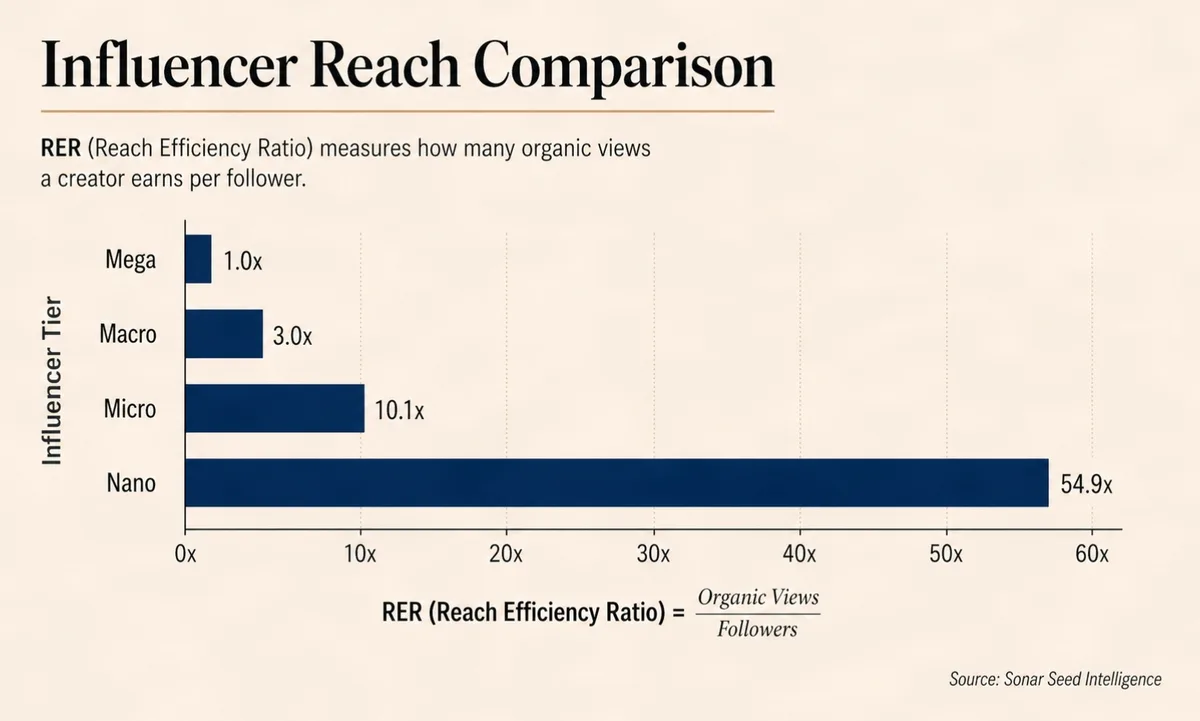
Brands do not buy "an influencer." They buy a tier, and each tier is priced for a different job. Tier classifications sort creators by audience size, from the smallest accounts to the largest stars. They set the price band a campaign starts at, and they signal what kind of result a brand should expect. Bigger does not mean better. It means different reach, different cost, and a different fit.
The base is simple. Influencer marketing occurs when a brand engages influencers who have an established credibility and audience on social media platforms to discuss or mention the brand in a social media post (Wikipedia). Those creators work across Instagram, YouTube, Snapchat, TikTok, and other online channels (Wikipedia). Influencers have the power to affect the buying habits of others by uploading original, often sponsored, content (Wikipedia). Tiers are how the industry sorts that power into price bands.
What the Tiers Actually Mean
The common ladder runs from nano to micro, then mid, macro, and mega. Nano describes the smallest accounts, usually a tight local or hobby audience. Micro adds a larger but still focused following. Mid and macro cover broad national reach. Mega is celebrity scale. There is no universal cutoff between the bands, and brands and agencies set their own. That is why the same creator can sit in one tier in one deck and another in the next. Treat tiers as bands, not lines. Readers following this should also see What the FTC actually requires influencers to disclose in sponsored posts.
How Tiers Drive Campaign Pricing
Pricing follows reach and effort. A bigger audience means more people delivered per post, so the fee rises with the tier. Production weight rises too, because larger campaigns ask for more polish, more approvals, and tighter deadlines. Smaller tiers cost less per post, which lets a brand book several voices at once instead of one. A balanced plan often mixes tiers: big names for awareness, smaller names for trust. The mix, not any single fee, is the real budget line. This connects to our earlier piece, FTC disclosure rules for influencers.
Why Brand Fit Beats Raw Size
Fit is where campaigns are won or lost. Recent research highlights that factors such as influencer attractiveness and quality of content play a major role in how strongly influencers shape consumer behavior (Wikipedia). Trust does the selling. When consumers trust influencers, they are more likely to make impulsive purchases (Wikipedia). That trust usually lives in smaller, closer audiences, which is why a low-tier creator can outsell a celebrity on a niche product. Fans can also respond well to honest promotion. Followers increased their engagement after disclosure, satisfied the creators were landing such deals (Wikipedia).
Disclosure Rules Apply at Every Tier
Tier size changes the fee, not the rules. Influencer content may be framed as testimonial advertising, according to the Federal Trade Commission in the United States (Wikipedia). The FTC started enforcing this on a large scale in 2016, sending letters to companies and influencers who had failed to disclose sponsored content (Wikipedia). Many Instagram influencers started using #ad in response (Wikipedia). Backlash to sponsored content grew more prominent in mid-2018, leading many influencers to focus on authenticity (Wikipedia). Disclose every deal, on every tier, every time.
Matching the Tier to the Campaign Goal
Start with the job. Awareness campaigns want eyeballs, so they lean macro and mega. Consideration and conversion want credibility, so they lean nano and micro. Launches often blend both: one large announcement, then a ring of smaller voices carrying it. Check engagement quality before price, because a quiet mega account is a worse buy than an active small one. Then negotiate scope, deliverables, and usage rights separately from the tier label.
Conclusion: Buy the Job, Not the Label
Tier classifications are a pricing shorthand, nothing more. They tell you the size of the pipe and set the opening number. Fit, trust, and content quality decide whether the spend works. Rank the goal first, pick the tier that serves it, and let the label start the negotiation rather than end it.