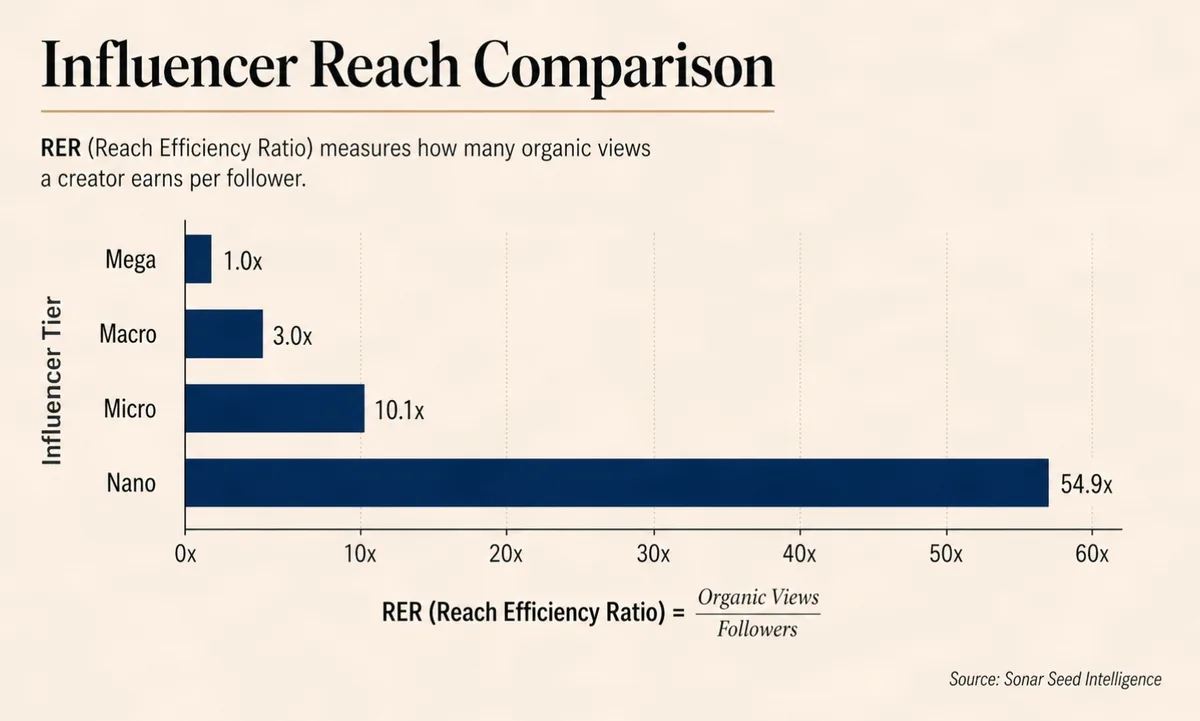
Becoming an influencer does not require a big following. It requires an audience that trusts you on one subject and acts on what you say. Brands pay for that trust, and the market behind it keeps growing: Influencer Marketing Hub reports that 87.49% of surveyed marketers expect their influencer budgets to rise, and 72.22% expect growth of at least 50%.
The practical path is short to describe and slow to walk. Pick a niche you can cover for years. Post on a schedule your audience can rely on. Prove engagement, then pitch brands that already fit your content. This guide walks through each step and what the first deal usually looks like.
What actually makes someone an influencer?
There is no follower milestone that flips a switch. An influencer is someone with enough credibility, connection, or expertise to shape what an audience thinks, considers, or buys. A creator with 5,000 engaged followers in a specialist niche can carry more influence than an account with hundreds of thousands of passive ones.
The numbers back that up. Influencer Marketing Hub's analysis finds nano-influencers average engagement rates of around 3.69%, more than double the rate for macro-influencers. Engagement, not reach, is the signal brands look for first.
Engagement rate is the share of followers who actually interact with a post through likes, comments, saves, or shares. It is the closest thing the industry has to a trust score, and it is what separates an influencer from someone who simply posts often.
How do you pick a niche that pays?
A niche is the one subject your content keeps returning to: skincare, budget cooking, running gear, small-business tools. The test is simple. Could a stranger describe your account in one sentence? If not, tighten it.
Two questions do most of the work here.
- Do people spend money in this lane? Beauty, fitness, food, fashion, tech, finance, travel, and parenting all have active brand budgets. A niche with no products has no deals.
- Can you post about it weekly for two years? Influence compounds through consistency. A topic you abandon in three months builds nothing.
Personal interest matters more than it sounds. Audiences can tell when a creator is filling a content calendar versus genuinely working through a subject. The first gets scrolled past; the second gets saved and shared.
How often should a new creator post?
Cadence is the schedule you can keep, not the maximum you can hit. A reliable three posts a week beats an ambitious daily run that collapses in week six. What matters to both the audience and the platform is a recognizable rhythm.
A workable starter structure looks like this:
- Set a floor you can hold. Pick the number of posts per week you could sustain in your worst week, then treat that as the commitment.
- Batch the production. Film or draft several pieces in one session so a busy week doesn't break the streak.
- Watch what earns engagement. Repeat the formats your audience responds to, and retire the ones they don't.
Consistency also does something quieter: it trains brands that you finish what you start. Campaign managers checking out a small account look for exactly that.
When and how do you pitch your first brand deal?
A brand deal is a direct payment from a company to a creator for featuring its product. You do not need an agent or a manager to land the first one. Most early deals come from a direct pitch, and the pitch is shorter than most new creators expect.
Before you write it, get the basics in order:
- A media one-pager or simple link-in-bio page with your niche, audience size, and engagement rate.
- Three to five examples of content you made about products you already use, unpaid.
- A clear idea of what you would deliver: one video, two stories, a pinned post.
Then pitch brands that already appear in your content. A short email works: who you are, who your audience is, why your followers would care about their product, and one concrete content idea. Small and mid-sized brands respond far more often than household names, because they run lean campaigns and read their own inboxes.
Product seeding is the other common entry point. That is when a brand sends free inventory to creators without payment, hoping for organic coverage. It is worth accepting selectively, because a feed full of unearned freebies dilutes the trust you are building. For a fuller picture of how paid work is valued once it arrives, see What a brand deal actually pays, and how the rate is set.
What should you know before you sign anything?
First deals are usually small, and that is fine. The point of the first contract is not the money. It is the case study: a piece of branded work you can show the next brand.
Read for three things before signing. Usage rights, meaning how long and where the brand can reuse your content, which drives the rate more than follower count. Exclusivity, meaning whether you are barred from working with competing brands for a period. And deliverables, meaning exactly what you owe and by when.
Disclosure is not optional. Regulators require paid endorsements to be labeled as such, and the rules apply to gifted products and affiliate links too. Our guide to What the FTC actually requires influencers to disclose in sponsored posts covers the specifics.
One more caution worth internalizing early: influence is not income. The gap between a growing audience and a sustainable business trips up plenty of creators, as Why influencers go broke: the real cash-flow math explains in detail.
What this means for your first year
The evidence points one way: influence is built on trust in a narrow subject, proven through engagement, and monetized through direct pitches to brands that fit. The commercial side is real. Influencer Marketing Hub's research found that 55.5% of consumers have purchased a product after seeing it promoted by an influencer, which is why budgets keep climbing.
What remains unknown for any individual creator is timing. Some niches move fast, others take a year to show traction. The controllable parts are the niche, the cadence, and the professionalism of the pitch. Start there, and let the follower count be a result rather than a goal.