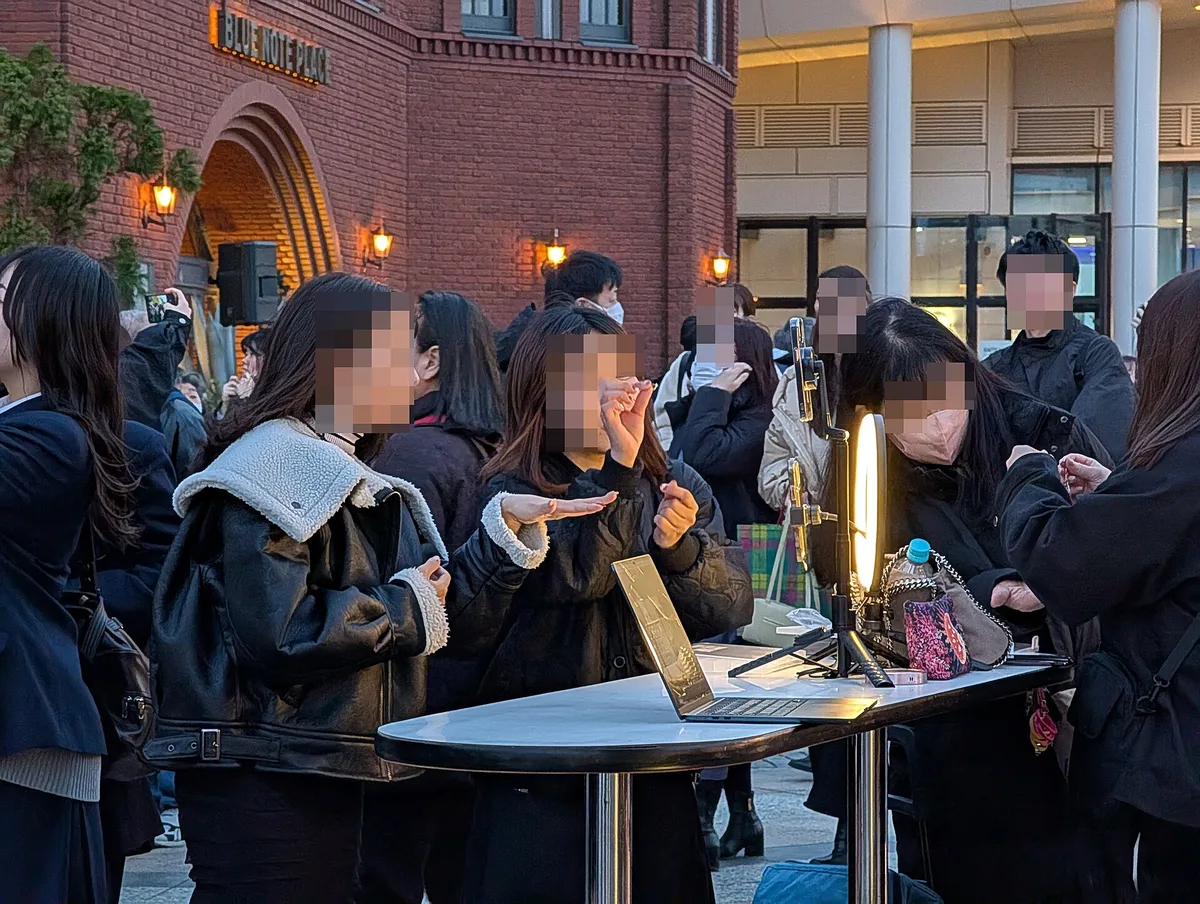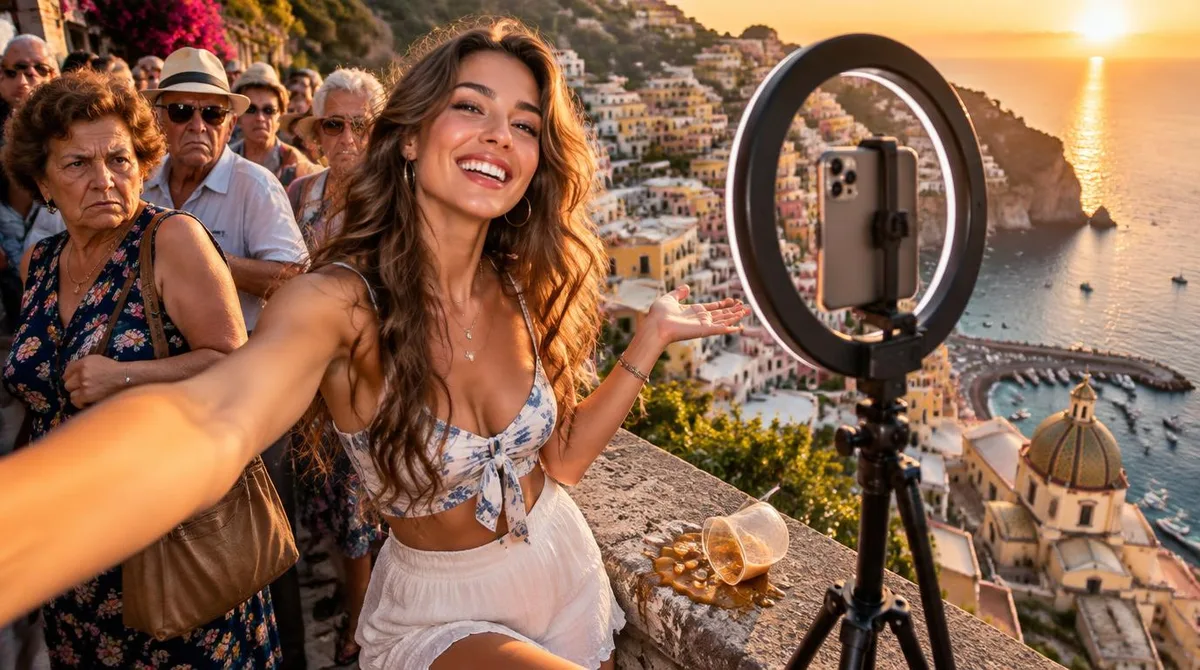
Every summer, the same pattern repeats in small coastal towns. Local businesses invite content creators in, hoping their posts will fill restaurant seats and hotel rooms. Then residents complain about crowded overlooks, staged photo shoots, and a season that starts to feel like one long advertisement. The town courts the creator economy and pushes back against it, often in the same month.
The tension comes down to what an influencer actually is. As Wikipedia defines it, an influencer is someone who can alter the attitudes, behavior, or decisions of others through their relationship with an audience — and, in its modern sense, someone a business pays to promote products and services. That definition explains both sides of the summer standoff. A creator's recommendation can move visitors to a town. It can also move so many of them that the town stops working.
This explainer looks at why resort towns chase that influence, what they get out of it, and where the friction starts. The short version: the audience is the product, and small towns are still learning what it costs to sell it.
Why do coastal towns want influencers at all?
The commercial logic is simple. A single post from a trusted travel creator can reach more people than a small town's entire annual marketing budget. That reach is why influencer marketing has become a standard line item rather than an experiment. According to Influencer Marketing Hub, research featured in its 2026 influencer marketing analysis found that 55.5% of consumers have purchased a product after seeing it promoted by an influencer.
For a seasonal economy, timing matters as much as reach. A resort town has roughly one hundred days to earn most of its revenue. A well-placed video about a beach, a lobster roll, or a sunset dock can convert a scrolling viewer into a summer visitor within weeks. Traditional advertising cannot match that speed or that specificity.
Towns also know the money is growing behind the practice. Influencer Marketing Hub's 2026 benchmark report found that 87.49% of surveyed marketers expect their influencer budgets to increase. When the brands spend, the creators travel — and the destinations they film become the ads.
What do creators actually bring to a small town?
Three things, and they are not all equal. The first is reach: an audience the town could never build on its own. The second is credibility. As Neal Schaffer, author of The Age of Influence, puts it in his guide to the term, real influence is when people listen and act on what you say — the follower count itself is not the point. A creator with a modest but engaged audience can matter more to a bed-and-breakfast than a celebrity passing through.
According to Neal Schaffer, citing Goldman Sachs estimates, roughly 50 million people now work as creators, and only about 4% of them earn over $100,000 a year. That second figure matters for towns. Most of the creators showing up in July are not rich visitors. They are working professionals hunting for content, comped meals, and a rate they can charge a brand later.
The third thing creators bring is a production footprint. Ring lights on a public beach. A tripod blocking a harbor walk. Twenty minutes of reshooting the same doorway. The content is the town; the town absorbs the shoot.
Where does the pushback come from?
The friction usually starts with volume, not values. A town that welcomed a handful of travel writers a generation ago now hosts a rotating cast of creators, each with a camera and a deadline. Popular spots get tagged, the tags drive more visitors, and the visit drives more posts. The loop feeds itself.
Residents notice three specific problems. Crowds at locations that were never designed for them. Behavior shaped by the camera — people recreating a shot they saw rather than enjoying the place. And a sense that the town's image is being written by outsiders who leave when the season ends.
There is also a quieter economic complaint. A creator's post may promote a specific business, but the crowd it draws spreads across everyone — the parking, the lines, the staff. The benefit is concentrated; the cost is shared. That mismatch is the engine of most town-hall arguments about tourism marketing, online or off.
What this means: how towns are adapting
The towns that handle this best treat creators as a channel to manage, not a tide to resist. The practical playbook looks like this:
- Design for the shot. Designate photo-friendly spots and keep the sensitive ones — dunes, private docks, narrow residential streets — clearly off-limits.
- Work with the businesses. A restaurant that hosts a creator knows what is being filmed and when. A town that finds out from the post does not.
- Set the rules early. Permits for commercial shoots, posted guidelines at popular locations, and a clear line between a visitor filming for fun and a professional on assignment.
None of this ends the tension. It moves the argument from "do we want this" to "on what terms," which is a more answerable question.
Why the summer cycle keeps repeating
Because both sides need each other and neither can opt out. Creators need fresh, beautiful locations; their audiences tire of the same backdrops. Towns need demand they cannot manufacture alone. The result is an annual negotiation played out in comment sections, selectmen's meetings, and the comment under a sunset post that says "please stop tagging this beach."
The pattern is not unique to coastal towns, either. The same dynamic shows up wherever an event or a place becomes ad space — we traced a version of it at the US Open, where sports events became ad space, and in how brands stage real-world moments for the camera. A resort town is just the version with sand. For related coverage, see Influencers in the wild: why brands stage real-world moments.
The honest takeaway: the creator economy did not break small-town summers. It made a trade-off visible that tourism boards had been making quietly for decades. Influence sells places. Places pay for that selling in crowds, and the bill arrives every July.
The bottom line for creators and towns
If you create travel content, the durable move is the one that builds trust rather than volume — the economics of travel influencing reward audiences that act on recommendations, not audiences that just watch. If you run a business in a resort town, assume the creators are coming either way, and decide what you want filmed before they arrive.
The towns that thrive will not be the ones that chased influencers hardest or banned them loudest. They will be the ones that treated a camera on the dock like any other commercial activity: welcome, managed, and priced.